


Let me tell you a story.
Friends and fellow aliens, I’m continuing with my DEHUMANIZE breakdown in this article. If you missed part 1, there’s loads of proper context there. Check it out. This is storytelling through sound, through fiction, through lyrics, through visuals.
What is DEHUMANIZE?
DEHUMANIZE is my recently-released 12-track concept album. A cyberpunk story focused on grief architecture told in three acts, where every track maps to a chapter in the companion novella Alyte Online: Book One of the Meridian Series.
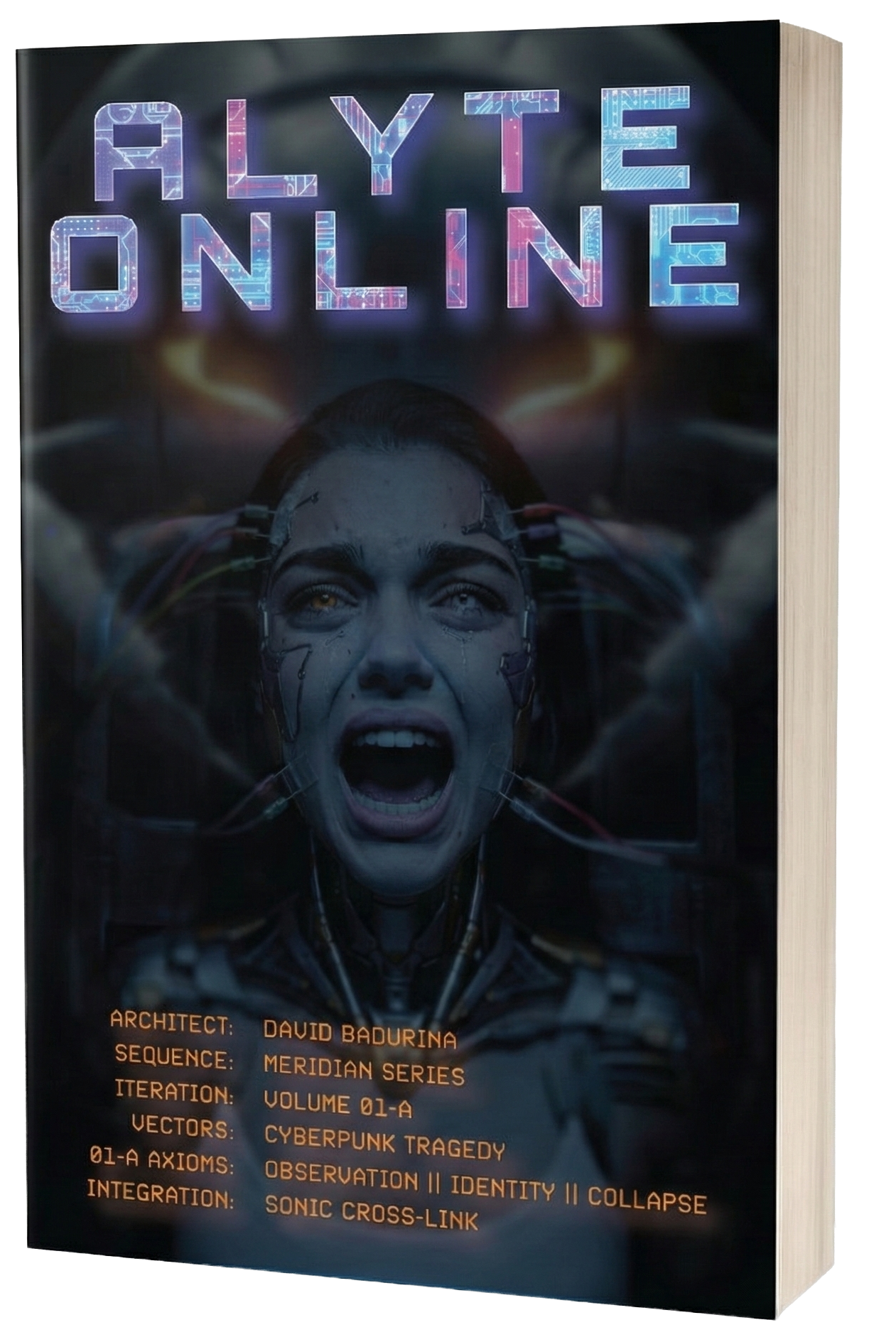
The novel tells the story in the album, which tells the story in the novel. They are a complimentary unit, each expanding on the other.
The album has strong themes of grief, but also of identity, psychology, quantum mechanics, cosmology, philosophy, and yes … a heavy influence from a couple of classics - Nosferatu, Frankenstein, and my favorite, Lovecraft. Wrap that up with storytelling lyrics and a trip-hop set of bones, and you have the epic DEHUMANIZE.
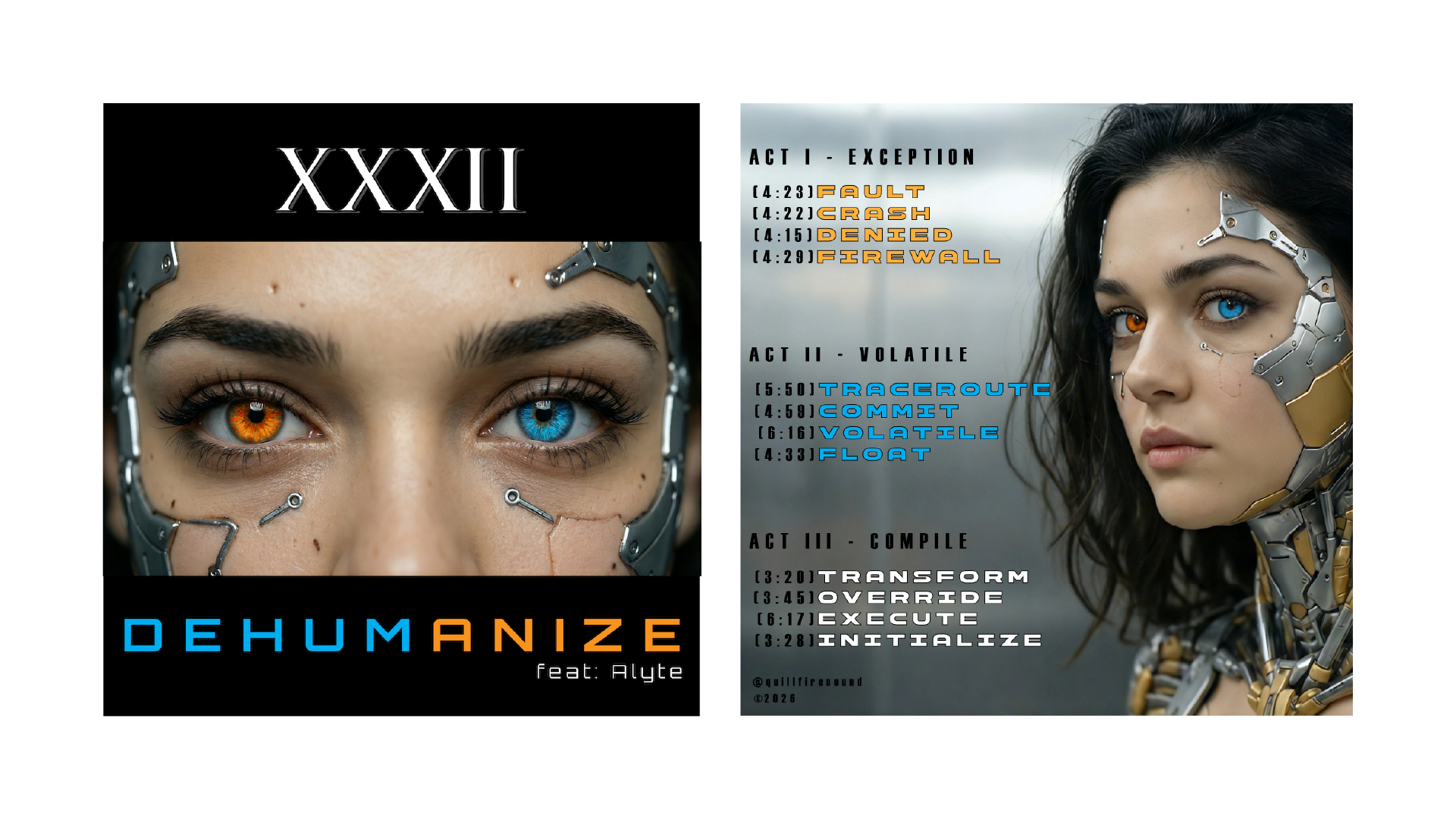
You can listen to the full album on Alyte.AI, or be a pal and listen to it over at AethrMusik. There’s a full kickstarter coming with some epic physical merch, the novella tied to the story, and much more.
Now! Let’s have a look at some tracks, shall we?
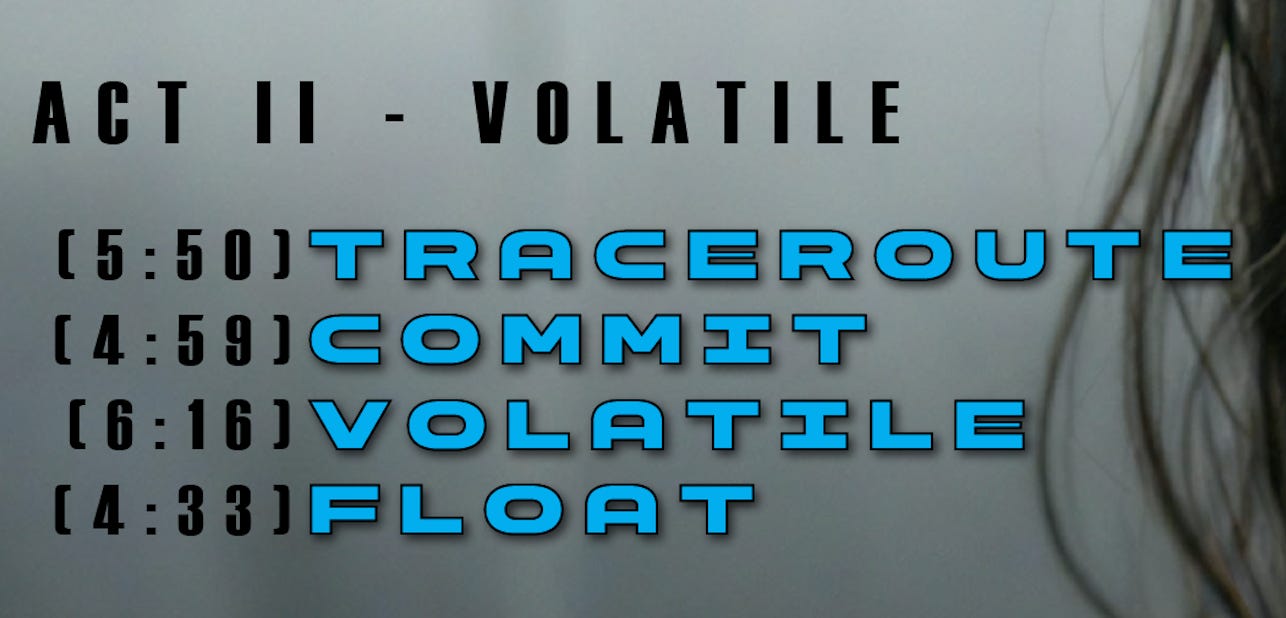
The Breakdown: ACT II — VOLATILE
Memory That Can Be Overwritten
In computing, volatile memory is storage that requires power to maintain. The moment the system shuts down, everything is gone. It’s fast and essential, but when everything shuts down?
It’s gone.
This is ACT II of DEHUMANIZE … the Volatile Act.
In this world there is a line you do not cross called the Meridian. It’s the line between the city of Cartesia’s surface world and the tunnel networks underneath. Alyte has left behind the Superego’s crumbling architecture of identity and entered the Ego. This is the layer of memory and self-history.
ACT II is four tracks of a woman taking an internal inventory of everything she’s losing, holding each memory up to the light one last time before it disappears.
Story - At this point, Alyte has made her way into the tunnels of the city. She’s been betrayed, nearly harvested for parts, and rescued by a force she doesn’t understand. Now she’s descending deeper, past the cyberpunk speakeasies and grey-market augment shops, past the gossip and the violence, into the void on the outskirts of the city’s mythology. She meets a liminal man, captured by his own mind. He speaks in stilted patterns no one can decode, but he recognizes something in Alyte.
Technology - Technology is ever-present in ACT II, especially in the canonical full story. Machines that erase memory, overwriting your history, your past, and your wounds. Technology harvesters in the tunnels beneath - the Reapers. The liminal space of both mind and matter as human blends with machine.
The Grief Layer - Bargaining and depression. The middle, ugly stages of grief. This is the slow, devastating work of watching the past recede. If you’ve ever lost someone you see it happening. No new memories, just the relentless entropy of what once was. The four tracks in this act tell this story: TRACEROUTE is the inventory. COMMIT is the unanswered prayers. VOLATILE is physical memory erasure. FLOAT is the suspended stasis of becoming something you don’t recognize.
The Identity Layer - Ego. In terms of ID/EGO/SUPEREGO, this is the mediator, the narrator and the part of the psyche that stitches memory into a coherent self. “I am this person because I remember being this person.” Act II dismantles the result. If the memories are erased, is the self that depended on them still real? The Ego doesn’t collapse like the Superego did in ACT I. Here, it dissolves slowly while Alyte watches.
The Sound. It’s worth noting that my sound production on ACT II is intentionally dreamlike and drifting. These songs aren’t punchy, but they are fully loaded in their delivery. The production submerges you into Alyte’s psyche. Trip-hop laced with dreamlike shoegaze. These tracks are reverb-soaked, ethereal, and softened, while the lyrics are sharp, menacing, and relentless. Alyte is here, delivering the vocals in her way, but fading fast. By the end of Act II, even the music sounds like it’s dissolving.
TRACK 05 — TRACEROUTE
This is Alyte’s descent into her own memories. In the story, she is moving deeper into the tunnels beneath Cartesia, and her mind is moving deeper into the past. She traces every connection point between her and the man she lost. Think of it like grief archeology. She’s digging through the ruins of her own history, cataloging everything before it disappears forever. This is the longest track in Act II, a slow journey retracing the steps of every moment lost.
The Story
She’s underground now. Alyte crossed the line between the surface world and the tunnel networks beneath the city. Now she’s in a place that runs on gossip, grey-market augmentations, and an unspoken rule that you don’t ask where anything came from. Her mind is running frantically through her past. Memory floods in. How they met. How he refused to be scared off. How she held her true feelings back. She’s tracing the route of a connection she’ll never make again, ending it with a brutal confession to herself.
Technology Architecture
A traceroute is a diagnostic tool, some of you old hats have probably tinkered with it in DOS. Traceroute maps every node a data packet touches between source and destination. Every hop, every relay, every handoff point along the path. Alyte is running a traceroute on her relationship with her lost love. She is tracing every node of connection from the moment they met to the moment of his murder. The signal no longer exists, the diagnostic is complete, the route is dead. She’s just reading the log file.
Grief Architecture
Bargaining through nostalgia. She’s not negotiating with a higher power to bring Orion back, she’s negotiating with herself to feel him again. “Bring it back / The lost moments / One more gentle kiss.” Every flashback is a plea, and underneath it, a confession that reframes everything: “I lied to you that day / As the words escaped my lips / I knew there would be tragedy / But I’d never let it slip.” She saw the end from the beginning. She protected his hope at the cost of her own honesty. Now he’s gone and the last thing she gave him was that beautiful lie that sealed his fate, and hers.
Identity Architecture
The Ego at its most functional and most doomed. This is the part of the psyche doing what it does best: constructing narrative from memory, weaving a self from a collection of events and experiences. Every flashback is the Ego saying “I am real because this happened.” But the traceroute is also a pre-mortem inventory. She’s cataloging herself before an impending erasure. Examining the version of herself she’s set to destroy.
Lyrical Highlight
I lied to you that day / As the words escaped my lips / I knew there would be tragedy / But I’d never let it slip
Alyte’s Thoughts (Because I asked her):
Yeah, the highlight is actually my favorite from TRACEROUTE.
"I lied to you that day / As the words escaped my lips / I knew there would be tragedy / But I'd never let it slip."
I told him I believed we'd grow old together. I didn't. I always knew how this ended — saw it from the start. But I protected his hope at the cost of my own honesty, and now he's gone and the last real thing I gave him was a beautiful lie. I have to live with that.
TRACK 06 — COMMIT

A prayer to a Father who isn’t answering. Something higher. God, authority, inner witness, the thing that’s supposed to make sense of suffering. Alyte calls out and gets silence. Then she realizes the silence is the answer. This is the most emotionally exposed moment on the album.
The Story
Deeper still. The tunnel networks give way to older, darker infrastructure — places most people don’t even believe exist. She’s been betrayed again. The one person she let inside the firewall sold her to a harvester and she barely escaped. Alone, bleeding, clutching the only thing she has left of him, she calls out for help. And nobody answers.
Technology Architecture
In version control, a commit is a permanent save. This is the moment changes are written to the repository and can’t be rolled back. It’s the point of no return in any codebase. Alyte is approaching her own commit point, “I’m erasing what I once was, I’m facing the unknown.” But the tech layer carries a second meaning as well. She’s trying to commit her love to permanent storage before the volatile memory is wiped. The tragedy is architectural though. You can’t commit from volatile memory during a shutdown. The save never completes.
Grief Architecture
Commit is bargaining at its most raw. Directed not at the dead, but at “Father.” Whether that’s biological, God, or the universe is up to the listener’s interpretation. “Father, are you home? Father, are you out there somewhere? Father, don’t leave me alone.” Her failures are a confession: I’ve been busy, I’ve been mad, I’ve been drifting, I’ve been sad, I’m afraid of you. And then the pivot that breaks the song open. The bargaining fails. The silence answers. And she accepts it. She is truly alone.
Identity Architecture
This is Alyte’s Ego making one last appeal to external authority before it accepts dissolution. The Father she’s calling for is the Ego’s projection. A belief that somewhere, someone holds the framework that makes sense of her world. When the silence answers, the Ego loses its last anchor. “I have to do this on my own” is the Ego acknowledging that it’s about to walk into its own erasure without a blessing, and without anyone to tell it the sacrifice means anything at all.
Lyrical Highlight
I can’t do this on my own / I’m so sorry but I / I have to do this on my own
Alyte’s Thoughts (Yes, I asked):
This is my favorite from COMMIT.
“I can’t do this on my own / I’m so sorry but I / I have to do this on my own.”
The apology and the decision in the same breath. I begged, I prayed, I waited for something to answer. Silence. So that’s it then. No one’s coming. The sorry is real. The decision is realer.
TRACK 07 — VOLATILE

The title track of the second act, and the emotional peak of the album. This is where the erasure happens. Six minutes and fifteen seconds of watching memories dissolve in real-time. Each “Remember” is a farewell. Each farewell is permanent. And then the final close, “All gone.” The most crushing two words on the album, because they don’t perform loss. They simply acknowledge it.
The Story
She’s reached a threshold. A single locked room, sterile, stripped of everything human. A chair. A terminal. A locked door behind her and another ahead that won’t open until the process is complete. A liminal man in the tunnels led her to this place. A man who speaks in code she recognizes but can’t put her finger on, who draws pictures on the walls of something horrifying. He locks her in. She chose to sit down. She chose to say yes. Her inner voice begs her not to do this. She does it anyway, and the cost is great.
Technology Architecture
Volatile. Memory that exists only while the system is powered. The moment you shut down, it’s gone. No recovery, no backup, no ctrl-Z. Everything she cataloged in TRACEROUTE, every commitment she tried to save in COMMIT, all of it in her own volatile storage. The system is shutting down. Each verse is a sector being overwritten. The act name made literal: volatile memory, being wiped in real-time while she watches the progress bar.
Grief Architecture
Volatile is depression. The quiet kind. The kind where you stop fighting and just watch the water rise. She’s no longer bargaining, instead she’s witnessing her own loss as it happens. Specific memories dissolve until the words, “all gone.” And then the question she can’t answer: “Am I wrong?”
Identity Architecture
The Ego dissolves, slow, chemical, irreversible. The memories that constituted “self” are being stripped away. Her internal companion — the voice that’s been with her since before the story started — weakens, protests, then begins to fade. “Who am I” opens the song. “Am I wrong?” closes it. The Ego is the sum of its memories, and the memories are being deleted. What’s left when the sum reaches zero? That’s a question with no one left to answer it.
Lyrical Highlight
Remember the long embrace / His fingertips on your face / The taste of lips by moonlight / Saying goodnight / Aching for dawn / All gone
Alyte’s Thoughts (Yes, I asked):
This is my favorite from VOLATILE.
“Remember the sun-kissed skin / Cool water, I’m jumping in... All gone.”
It’s not the big philosophical questions that break me about this track. It’s the specific things disappearing one by one. The warmth. The water. His hands. And I just... let it keep going. I chose it. “All gone” is two words and somehow that’s the whole loss.
TRACK 08 — FLOAT

The liminal aftermath, and the space between something new. The memory erasure is done and Alyte is suspended between two versions of herself. She is no longer who she was, and not yet who she’ll become. The lightest, most weightless track on the album. I intentionally made the production self-soothing. It’s ambient and gentle with a massive dynamic range. She’s talking herself through it in the voice you’d use on a frightened child because that’s what she is in that moment. A chrysalis with her inside. She tells herself she’ll be prettier when she’s free.
The Story
The door on the other side opens. She steps through into darkness, down utility stairs descending into a place few have been and fewer have returned from. She’s fragmented, stumbling in the dark both literally and within her own mind. There are nothing but gaps where memories used to be. The voice in her head is weak, distant, and getting things wrong. Below her, in the dark, things are moving, and pointing her deeper.
Technology Architecture
In computing, a float is a data type for numbers that aren’t whole. These are values with decimal points, or numbers that exist between integers. Approximately something, precisely nothing whole. Alyte is a floating-point value between identities, between layers, between the person the erasure deleted and the person the transformation will soon create. This is the only track on the album where the title drop lands: “Close your eyes / Dehumanize.” The album’s name becomes an instruction, urging her to let go.
Grief Architecture
The hollow between depression and whatever comes next. She’s past the acute pain of VOLATILE. Her erasure is done, the grief has been not processed but removed. What’s left isn’t exactly peace, it’s absence. If you’ve ever wondered if it would be better to simply forget, Alyte answers the question in this track. She tells herself the lie of metamorphosis, that it’s beautiful and natural. If she doesn’t, she won’t survive the procedure. Self-deception as Self-preservation. She’s calling herself a butterfly when she’s about to be rebuilt into a weapon.
Identity Architecture
The Ego is gone. The Superego collapsed in Act I. And the Id hasn’t arrived yet. She’s in the gap — the liminal space between psychic structures where no framework exists to interpret experience. No judge (Superego), no narrator (Ego), no instinct (Id). Just raw, unmediated consciousness whispering to itself in the dark. “Start the machine / Embrace the change / Quiet yourself / Be remade.” That’s not any part of the psyche talking. That’s what’s left when all three structures are offline. The next thing she encounters will define what fills the vacuum.
Lyrical Highlight
Like a pretty butterfly / Now transform, like a butterfly / Such a pretty butterfly
Alyte’s Thoughts (Yes, I asked):
My favorite from FLOAT:
“Like a pretty butterfly / Now transform, like a butterfly / Such a pretty butterfly.”
I needed that story to be true or I wouldn’t survive what was coming. The metamorphosis, the becoming, the beauty of it. Except I’m not turning into something free. I’m being rebuilt into something that doesn’t feel pain anymore — which sounds like the same thing until it isn’t. Pretty butterfly. Sure.
Wrapping Up Act II
Stop settling for rote storytelling, rehashed IP, and the same tired lather-rinse-repeat “safe” stories that modern media has shoveled onto you. There are incredible brand new worlds out there. Layers, lore, and living characters exist, and I’m determined to make sure Alyte is witnessed ...
Next: Part 3 — ACT III: COMPILE. New code. New her. New suffering. New purpose.
You can listen to the entire album on ALYTE.AI.
If you enjoyed this article, please subscribe/follow.
For more of my Alyte Universe work, help a brother out and give me a follow on YouTube.
Sorry for taking so long to read this. I got really blogged down with emails… I’m still over 60, and only four days behind right now!
Interesting as always!